B2B E-commerce Website Redesign

Improving decision-making for analytical instrument buyers by redesigning navigation to clarify a fragmented B2B journey

Improving decision-making for analytical instrument buyers by redesigning navigation to clarify a fragmented B2B journey

57

Monthly New Users in the Q1

80%

Order Completion Rate in the Q2

6 Mins

Drop in average order submission time from over 10 mins on paper submission form

66.7%

Drop in status-check calls after 2 months
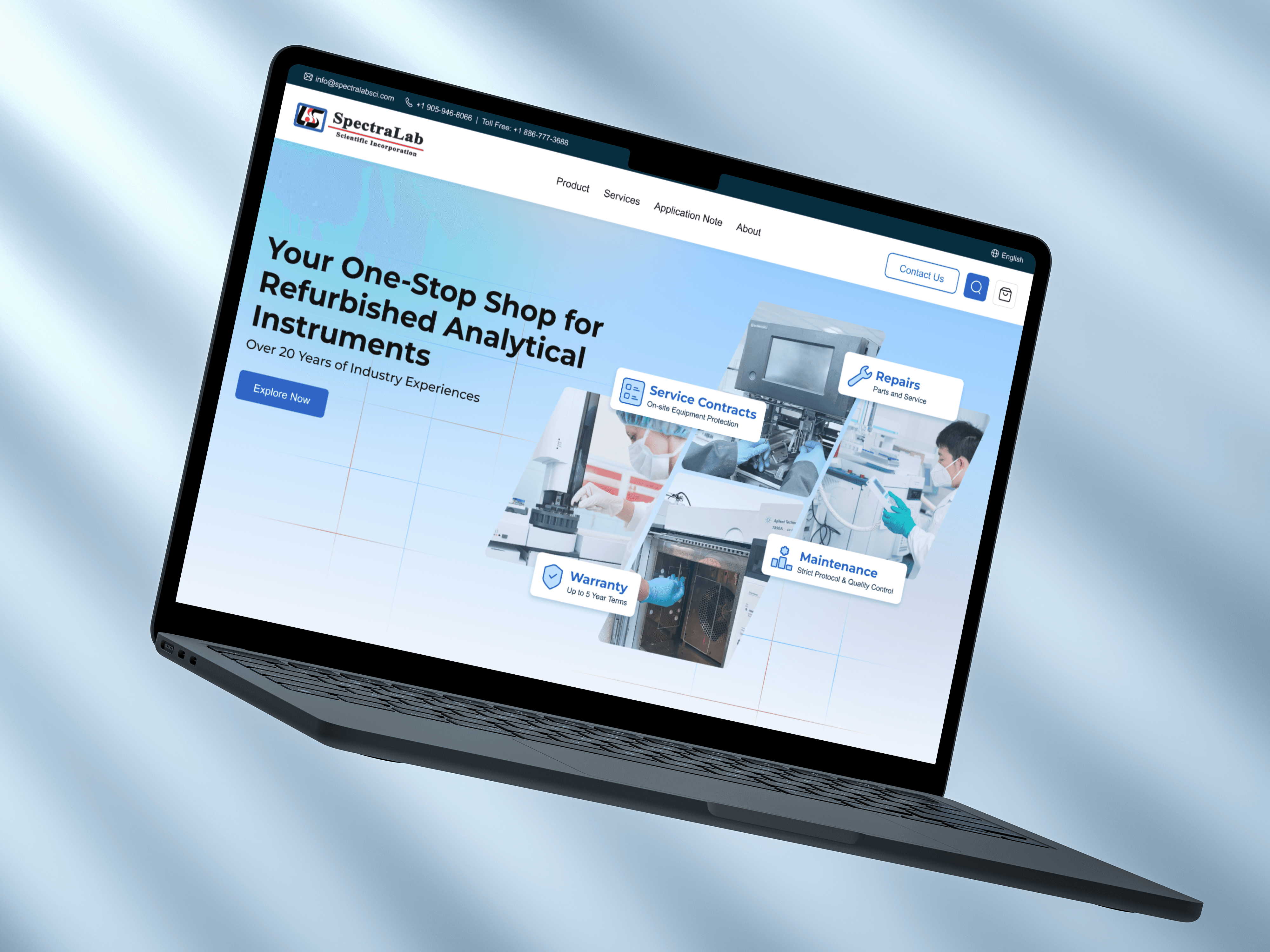
To transform a complex product catalog into a high-performing B2B platform. I led the end-to-end redesign for SpectraLab Scientific, refreshing the brand identity and optimizing site architecture for SEO to optimize the inquiry path for global research laboratories.

To transform a complex product catalog into a high-performing B2B platform. I led the end-to-end redesign for SpectraLab Scientific, refreshing the brand identity and optimizing site architecture for SEO to optimize the inquiry path for global research laboratories.

Client

SpectraLab Scientific

Timeline

10 weeks

Role

UX/UI Designer & WordPress Developer

UX/UI Designer
WordPress Developer

Team

Sales, Engineering

Read

3 mins read

Things started from a perfect storm.

SpectraLab Scientific is a global provider of refurbished laboratory equipment and laboratory solutions.

In early 2025, global trade shifts and a major competitor's collapse handed SpectraLab a rare opportunity to rapidly expand into the US market. Suddenly, we had an influx of high-intent traffic. But, our website wasn't ready to convert them…

As the Solo Lead Designer, I redesigned the site architecture and UX to capture a sudden influx of US market share, drastically reducing bounce rates and empowering the sales team.

The Problem

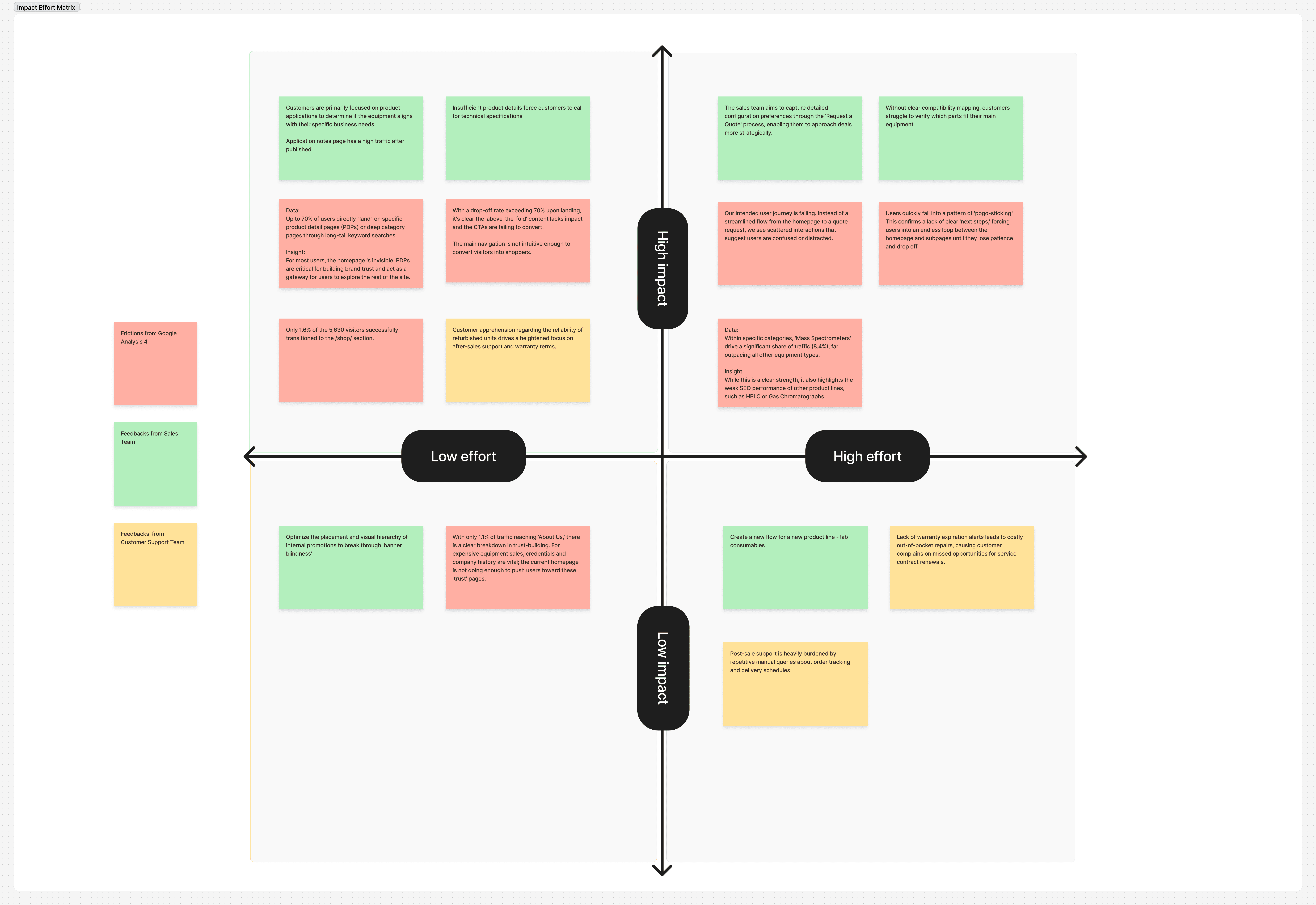
Through GA4 analytics and intense feedback from the sales team, the friction became obvious:

73%

73%

73%

Bounce Rate on Home Page showing poor site structure frustrated navigation

70%

70%

70%

of traffic dropped directly onto Product Detail Pages (PDPs). But lack off brand trust signals as the first touchpoint page.

Passive Lead Generation

Passive Lead Generation

Passive Lead Generation

Lacking data-driven insights, the sales team cannot effectively target high-quality leads.
The Goal

We didn't just need a visual refresh. The goal was to enhance sales and convert leads by building trust signals and reshaping the user experience. We needed to restructure the information architecture to optimize SEO, establish instant brand credibility, and guide users smoothly from discovery to a highly-qualified quote request.

I also conducted a strategic audit of direct and indirect competitors (Gentech, Marshall Scientific, Cambridge Scientific, Equipnet, and more) in North America to define the "Industry Gold Standard" and identify opportunities for differentiation.

We primarily focus on our opportunities in trust architecture, conversion friction, and information structure.

  • How do they grab clients' attentions in landing page?

  • What are their trust signals strategies?

  • How effective is their website structure?

  • How do they convert clients in their golden path?

How might we improve SEO and drive more sales by reorganizing our website structure?

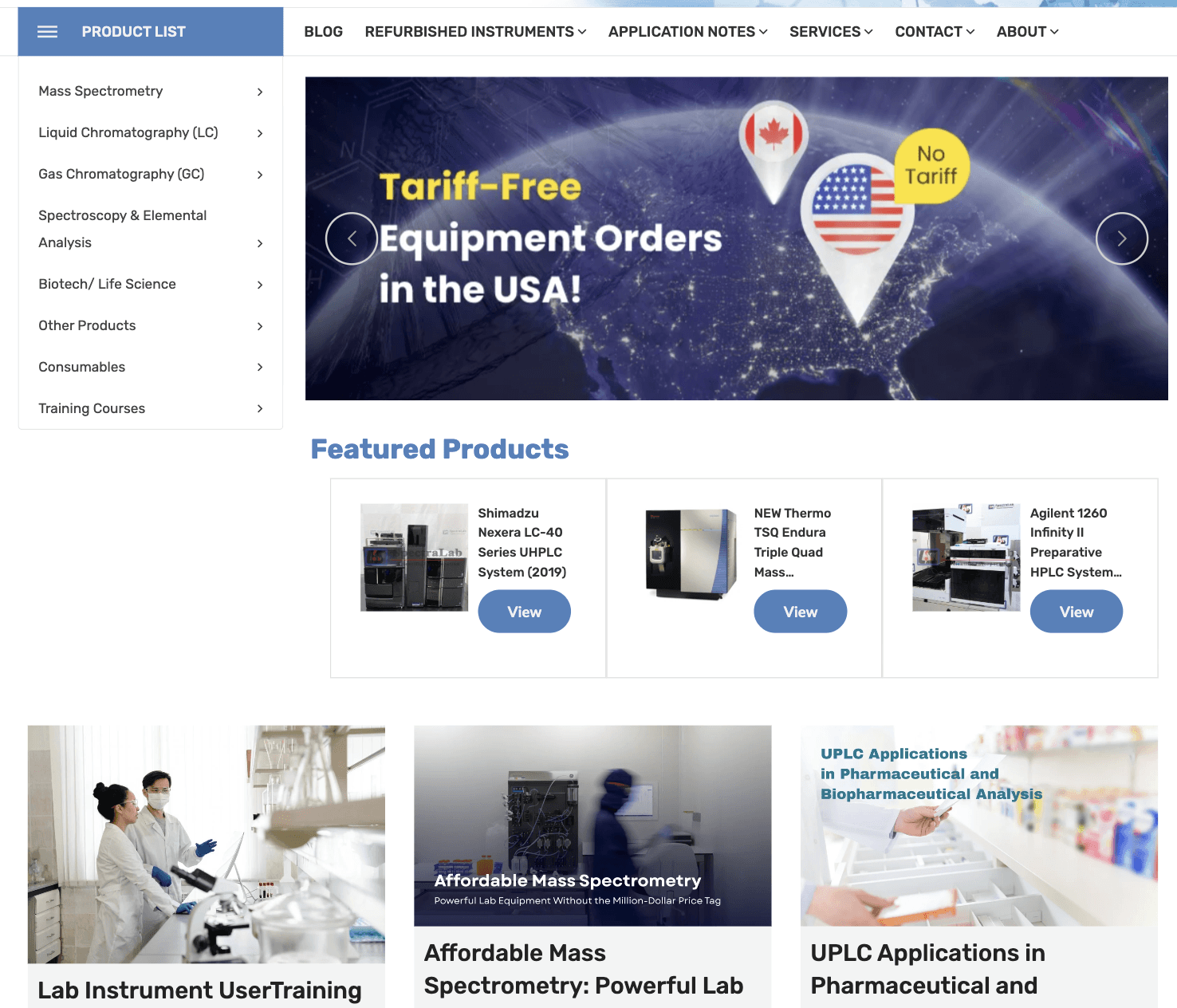
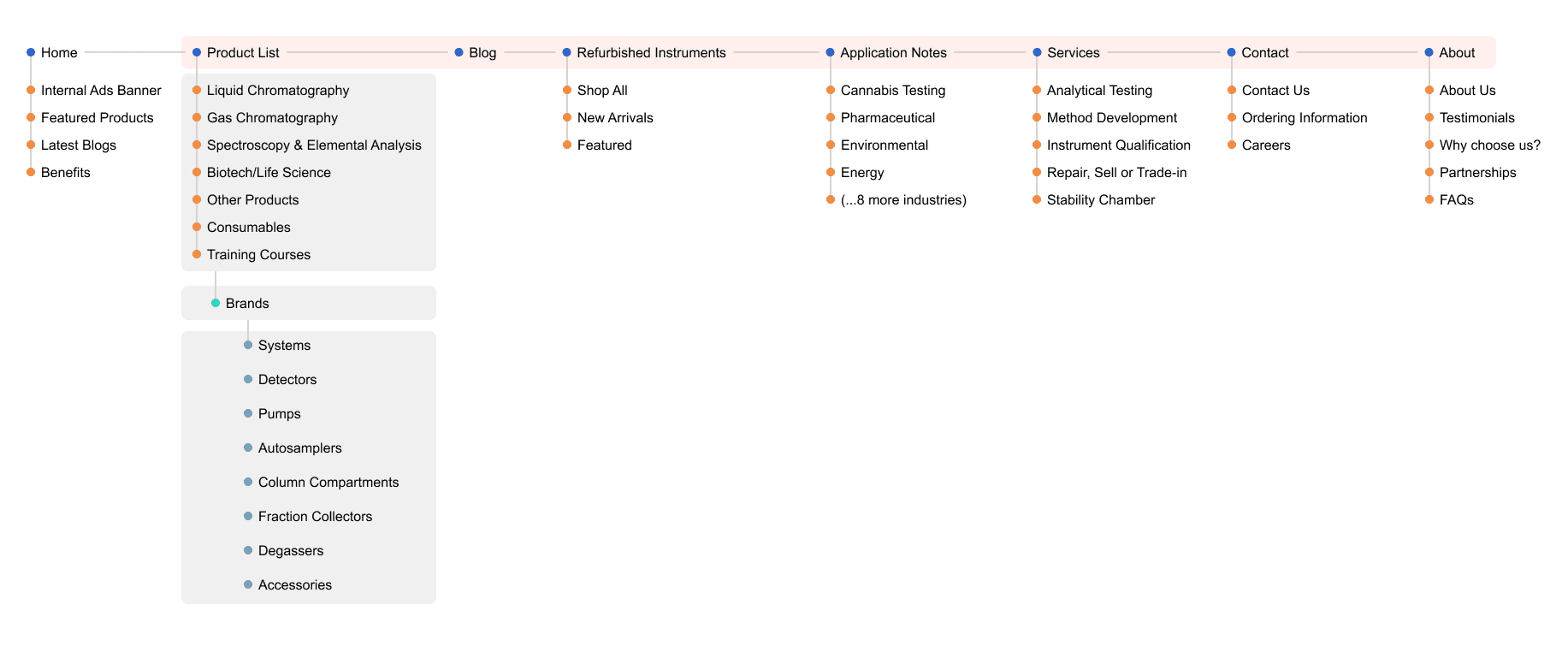
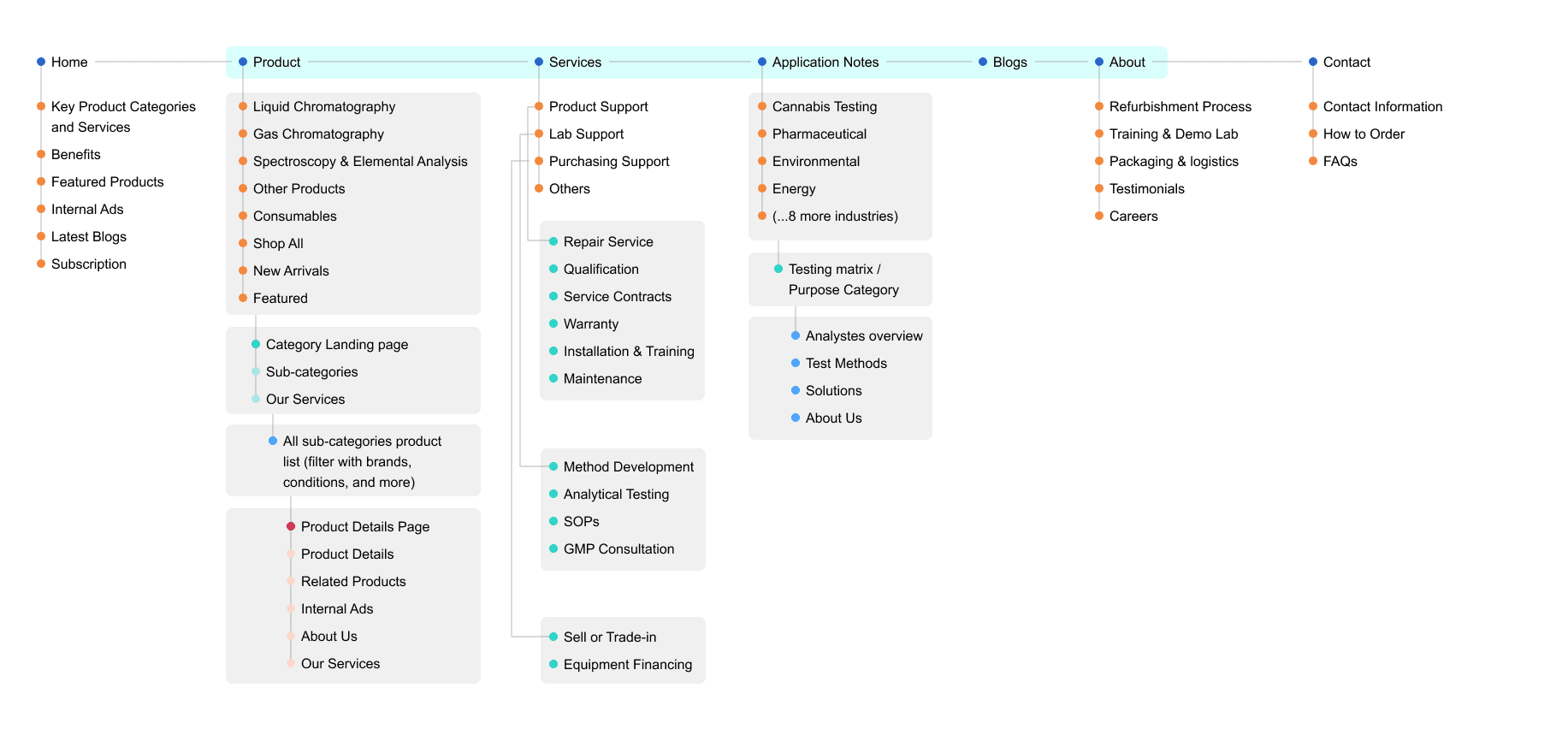
Before designing, we had to stop the bleeding at the structural level. The legacy site buried critical Application Notes and Trust signals. I re-mapped the entire ecosystem, prioritizing clear categorization and paving a direct 'Golden Path' for the user journey.

Information Architecture_Old
Information Architecture_New
Solution 1

From Maze to Map.

Users shouldn't have to guess what we sell. In the B2B industry, time is valuable. By introducing a comprehensive Mega Menu and surfacing core service hubs directly on the homepage, we exposed the entire site architecture at a glance. We turned a confusing maze into a guided tour, making it effortless for scientists to explore beyond their initial landing page.

OUTCOME

The solution drastically reduces bounce rates and drives cross-selling from xx% to xx% by making our full capacities instantly visible.

From Maze to Map.

Users shouldn't have to guess what we sell. In the B2B industry, time is valuable. By introducing a comprehensive Mega Menu and surfacing core service hubs directly on the homepage, we exposed the entire site architecture at a glance. We turned a confusing maze into a guided tour, making it effortless for scientists to explore beyond their initial landing page.

OUTCOME

The solution drastically reduces bounce rates and drives cross-selling from xx% to xx% by making our full capacities instantly visible.

Solution 2

Finding 1 in 10,000. Zero Guesswork.

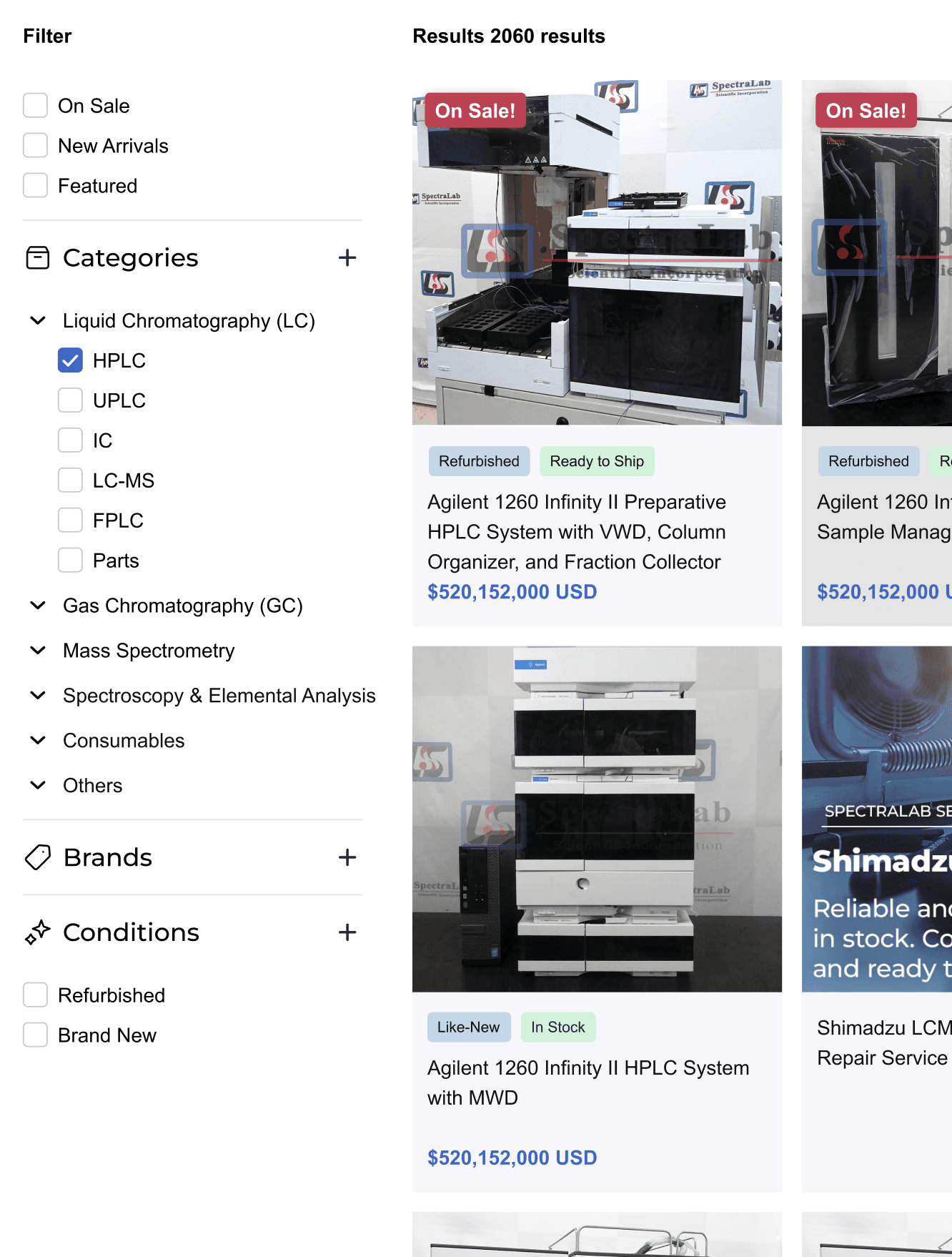
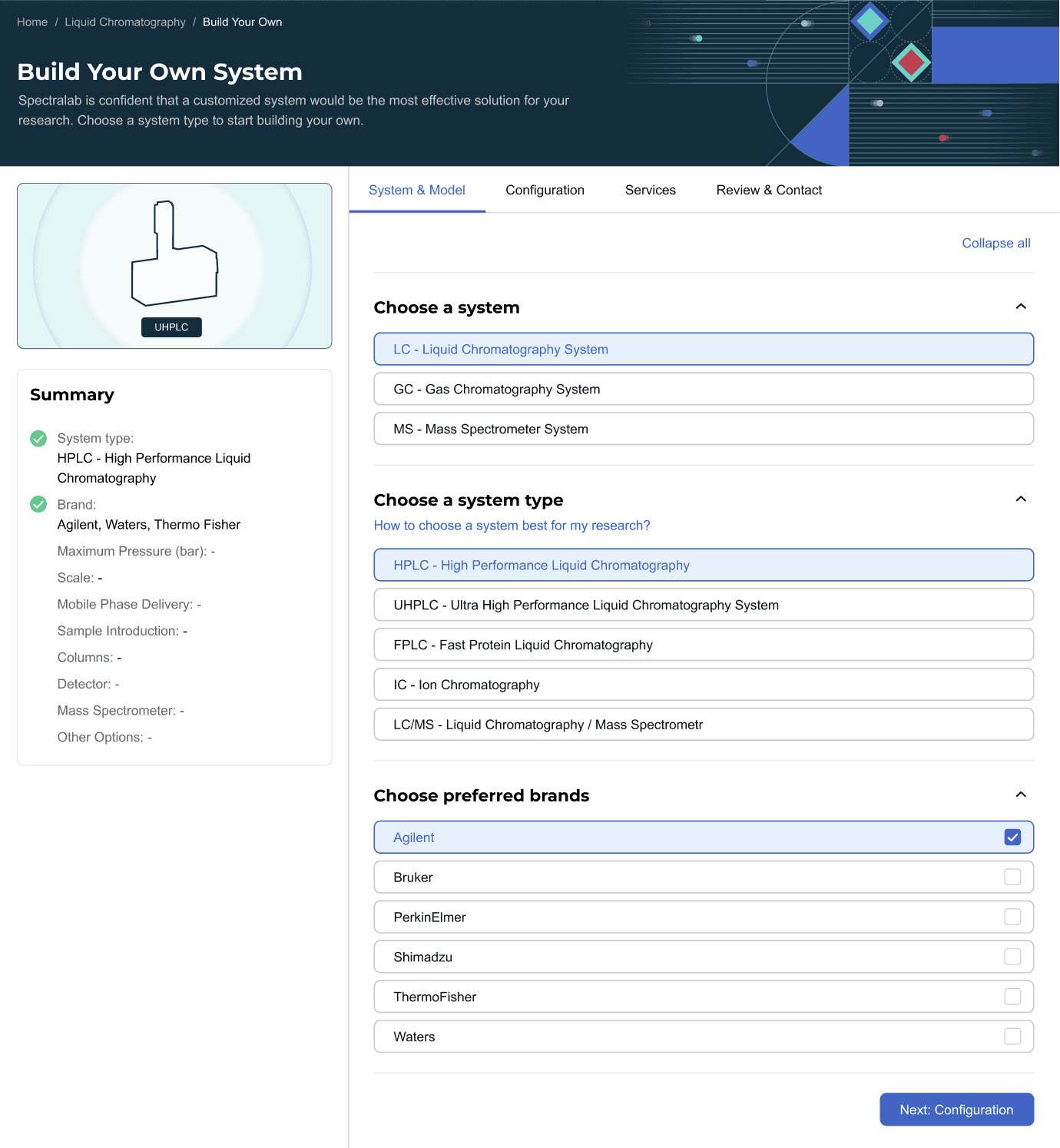
Navigating 10,000+ products is overwhelming. We engineered Advanced Filters to let buyers instantly slice the catalog by their exact laboratory research needs. To push this further, we laid the groundwork for a custom Product Configurator. It is a guided flow that helps users build their ideal setup step-by-step.

OUTCOME

Accelerates the research phase and transforms generic inquiries into highly-qualified, exact-match leads for the sales team.

Finding 1 in 10,000. Zero Guesswork.

Navigating 10,000+ products is overwhelming. We engineered Advanced Filters to let buyers instantly slice the catalog by their exact laboratory research needs. To push this further, we laid the groundwork for a custom Product Configurator. It is a guided flow that helps users build their ideal setup step-by-step.

OUTCOME

Accelerates the research phase and transforms generic inquiries into highly-qualified, exact-match leads for the sales team.

Solution 3

Selling the solutions and trust, not just the specifications.

In high-ticket B2B, the Product Detail Page (PDP) is the new front door and trust is the ultimate feature. I redesigned PDPs to act as standalone trust engines, embedding Social Proof. By optimizing the expertly written Application Notes, we tell users that we are not just listing technical parameters; we have aligned products with the buyer's actual research intent.

OUTCOME

By proactively answering "Why trust us?" and "Will this work for my lab?", the website does the heavy lifting, shortening the sales cycle before the rep even picks up the phone.

Selling the solutions and trust, not just the specifications.

In high-ticket B2B, the Product Detail Page (PDP) is the new front door and trust is the ultimate feature. I redesigned PDPs to act as standalone trust engines, embedding Social Proof. By optimizing the expertly written Application Notes, we tell users that we are not just listing technical parameters; we have aligned products with the buyer's actual research intent.

OUTCOME

By proactively answering "Why trust us?" and "Will this work for my lab?", the website does the heavy lifting, shortening the sales cycle before the rep even picks up the phone.

Jianting. D

Jianting. D

menu

Design Clarity for Growth

Copyright © Jianting Deng